
Reviewed · VITI LEVU TOURS
Vavavi – Fijian Cooking & Cultural Experience
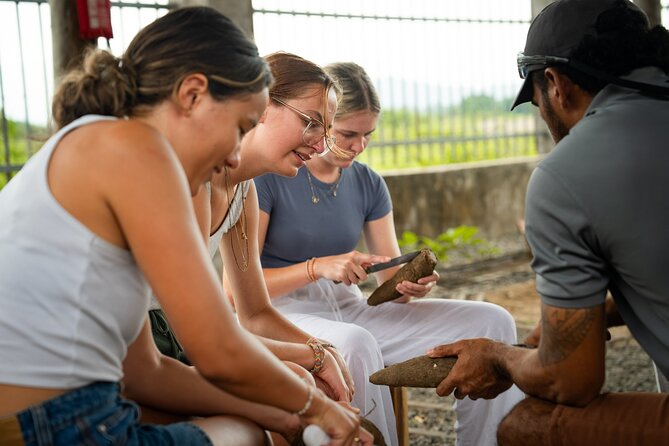
The best part of Vavavi is that you do not simply eat Fijian food, you help make it. Your six-hour day moves from the local market to a family setting, where you prepare dishes, watch a lovo earth oven being built, and sit down to the meal together.
I especially like the market visit, which gives you a practical look at where local produce is bought, and the hands-on cooking. The small group, capped at 12 people, also leaves room for personal attention from Sam, Rocky, Joy, and John. The one drawback is the fixed 9 a.m. start and the fact that transport from outside Nadi and Denarau is not included.
Key points before you book
- A real lovo meal: Help prepare food for Fiji’s traditional earth oven rather than simply watching a cooking show.
- Market stop included: See where locals purchase fresh produce for everyday cooking.
- At least four foods prepared: Make dishes such as palusami and eggplant tavu with fresh ingredients.
- Cultural activities included: Try coconut scraping, weaving, and kava tasting.
- Small family-run setting: The group limit is 12, with the Vavavi team providing a more personal day.
- Lunch and drinks covered: Coffee, tea, bottled water, and lunch are included in the price.
A cooking day that begins with the source of the food
Vavavi’s Fijian Cooking and Cultural Experience is built around a simple idea: food makes more sense when you know where it comes from and who prepares it. The day starts at 9 a.m. at the Vavavi meeting point on Enamanu Road in Nadi, with pickup offered in the Nadi and Denarau area.
You are welcomed with a drink before the cooking begins. That small opening matters. It gives you time to settle into the family-run setting, meet the team, and understand that this is not a rushed restaurant class. The experience is designed around participation, conversation, and a shared meal.
The group limit of 12 is one of the strongest practical features. A larger class could turn coconut scraping or food preparation into a spectator activity. Here, you have a better chance to take part directly and ask questions as you work.
The team includes Sam, Rocky, Joy, and John. The exact role of each person may vary during the day, but the hosts are involved in guiding the cooking and cultural activities. The tone is warm and informal, with several families describing the setting as clean, safe, and easy to enjoy across three generations.
Other Viti Levu days people book alongside this one:
- Cruisin Fiji: Authentic Fijian Day Cruise – Best Day in Fiji
★ 5.0 · 2,409 reviews - Jet Boat Safari on the Sigatoka River
★ 5.0 · 1,135 reviews - Captain Cook Cruises Fiji – Island and Reef Day Cruise
★ 4.5 · 752 reviews
The local market puts Fijian cooking in context
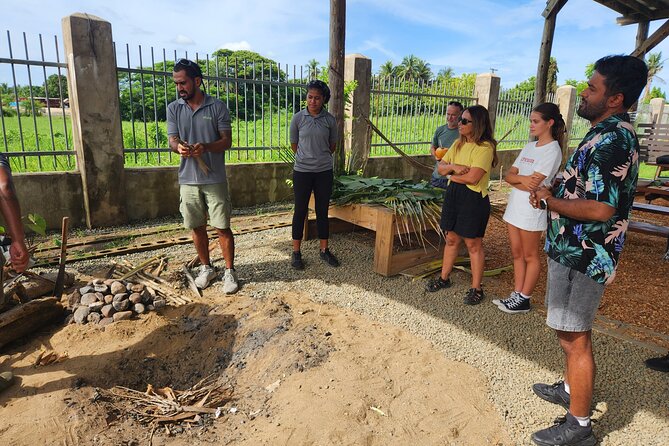
The market visit is more than a quick stop to fill time. You see the fresh produce used in daily Fijian cooking and gain a clearer idea of how local households shop. This is useful because it connects the dishes you prepare later with the ingredients you see first.
For you, the market is also a chance to ask practical questions. What is commonly bought? Which ingredients are used in home cooking? How does the selection change from what you might see in a hotel restaurant? The tour description does not promise a specific market or list every item, so the exact selection can vary, but the purpose is clear: to show you the everyday food system behind the meal.
I like this part because it makes the cooking class less isolated. You are not simply handed prepared ingredients in a kitchen. You first see the produce in a local buying setting, then use fresh local ingredients during the class.
Plan for a relaxed pace rather than a tightly timed sightseeing stop. The full activity lasts about six hours, and the market is one part of a day that also includes cooking, cultural demonstrations, and lunch. Wear something comfortable and practical for handling food and taking part in activities.
Preparing palusami and eggplant tavu
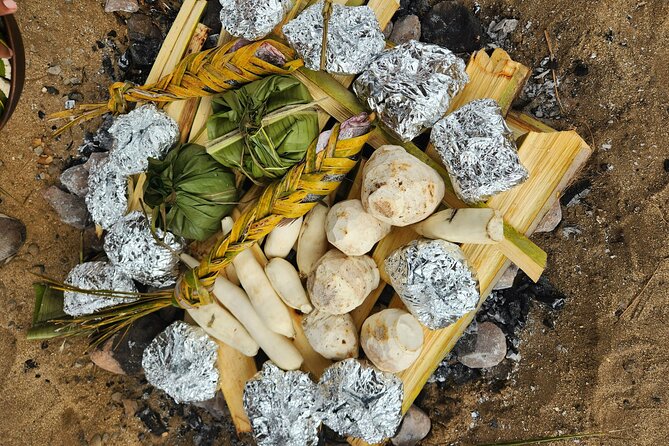
After the market, you help prepare food for the lovo and make other traditional Fijian dishes. At least four foods or dishes are included in the preparation, with palusami and eggplant tavu given as examples.
Palusami is a particularly useful dish to encounter in a cooking class because it shows how simple ingredients can become a substantial shared food. The preparation process is part of the point. You are learning through your hands, not just receiving a spoken explanation.
Eggplant tavu brings another style of Fijian cooking to the table. The class gives you a way to see how fresh vegetables fit into the meal, which is helpful if you want more than an introduction focused only on meat or seafood. The available information does not specify every dish prepared on a particular date, so you should treat the named foods as examples rather than a guaranteed complete menu.
This is a good match for curious eaters who enjoy cooking at home. It is also suitable if you are not an experienced cook. The emphasis is on taking part, and the small group makes it easier to follow along.
Families appear to fit the format well. One family booked with three generations and found that everyone could take part, while another family said the children and parents enjoyed both the market and cooking class. That does not mean every child will enjoy every activity, but the mix of food, movement, and cultural demonstrations gives younger participants more variety than a seated lecture.
Watching the lovo take shape
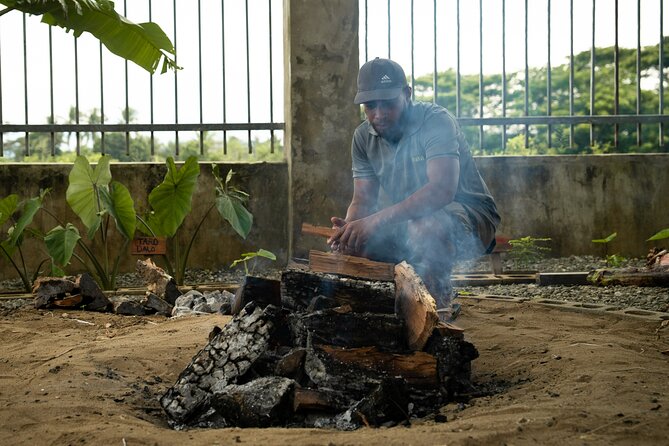
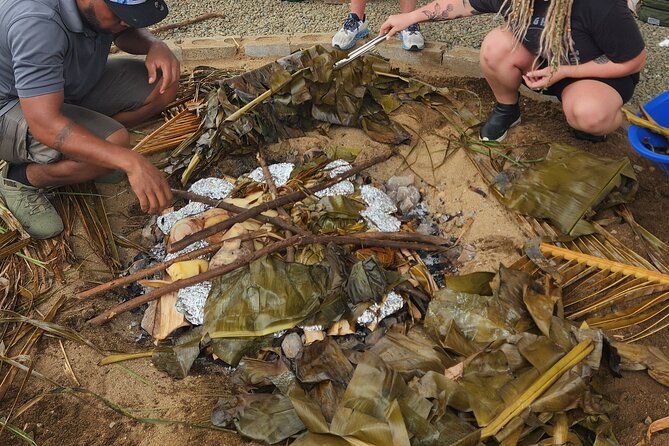
The lovo is the centerpiece of the day. You witness a demonstration of how the earth oven is set up, then help prepare food that will be cooked inside it. This connects the cooking method to the final lunch in a way that a standard kitchen class cannot.
A lovo uses heated stones and an earth-covered cooking method, but the supplied details do not specify the construction materials, exact cooking time, or the full sequence used at Vavavi. What you can expect is a demonstration of the setup and food prepared for cooking in the oven.
The appeal is both practical and social. A lovo is not just a way to cook a dish. It turns meal preparation into a shared event, with the food prepared ahead of time and served later as part of a larger gathering. You get to see the process before sitting down to eat.
The timing also gives the day a natural rhythm. You begin with a welcome, see the market, prepare ingredients and dishes, take part in cultural activities, and then enjoy the completed meal. Since the tour lasts roughly six hours, you should expect a full half-day rather than a quick two-hour class.
A few more Viti Levu half-days worth weighing up
- Malamala Beach Club – Full Day
★ 4.5 · 684 reviews - South Sea Sailing Full Day Trip (5 years and above only)
★ 5.0 · 600 reviews - Jewel Of Fiji incl Fijian Village, waterfall & Lunch(Nadi Hotels)
★ 5.0 · 570 reviews - Full Day South Sea Island with Lunch & Drinks
★ 4.0 · 538 reviews
Coconut scraping, weaving, and a first taste of kava
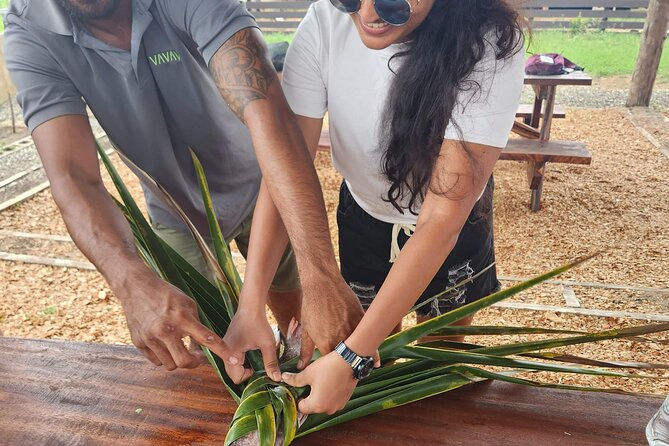
The cultural activities add variety to the food preparation. Coconut scraping lets you try a traditional task for yourself, while weaving offers a different kind of hands-on activity. These are small actions, but they can tell you more about daily skills than a short cultural talk would.
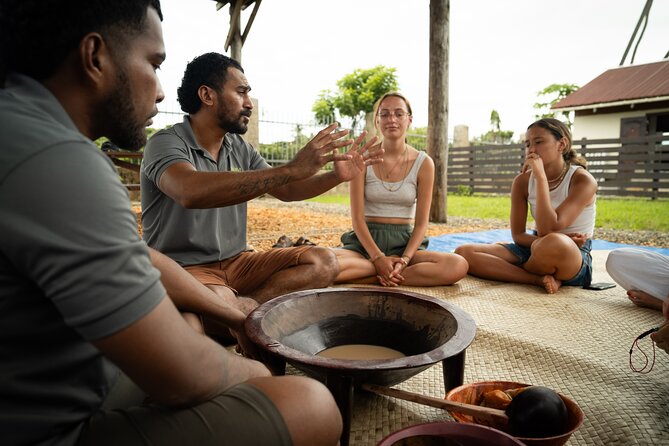
You also receive a kava tasting. Kava is an important part of social and ceremonial life in Fiji, and a tasting gives you a brief introduction to it in the setting of a local cultural experience. The information provided does not state how much is served or describe the flavor, so approach it as a sample rather than a full kava ceremony.
These activities are worth considering if you want contact with Fijian culture beyond food. The experience does not try to cover every part of island life in one day. Instead, it gives you a few focused ways to participate, with cooking as the main thread.
The variety is also helpful for mixed groups. Someone who is less interested in cooking may enjoy weaving or the market, while someone else may prefer preparing the food. The group still shares the same lunch at the end.
Lunch is the payoff, not an afterthought
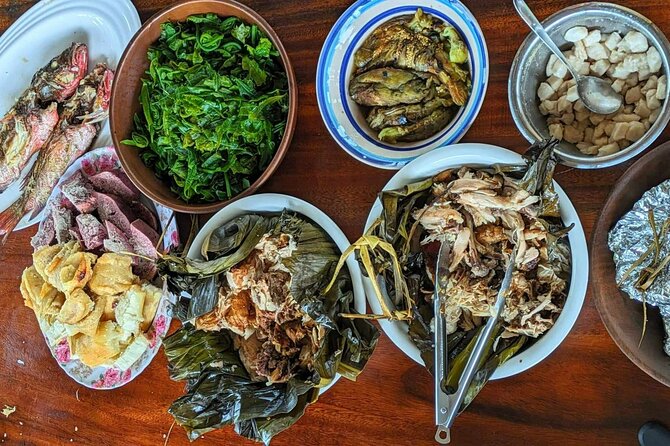
Lunch includes the food prepared during the day, with drinks included. Coffee, tea, and bottled water are also part of the package. The meal gives you a chance to taste the results of the work rather than leaving with only notes or a recipe.
I like this structure because the food carries a story. You have seen the produce, handled the ingredients, helped prepare dishes, and watched the lovo process. By lunchtime, the meal has a clear connection to everything that came before it.
The menu can change, and no full menu is promised. Palusami and eggplant tavu are examples, not a fixed list of everything you will eat. If you have allergies, dietary restrictions, or religious food requirements, tell the operator when booking.
Vavavi states that it can cater for vegetarian, vegan, halal, and gluten-free diets. That is a real advantage for mixed groups, though you should still provide precise details in advance. Dietary care is much easier when the kitchen has time to plan rather than adjust at the last minute.
What the $117.12 price really covers
At $117.12 per person, this is not priced like a simple meal. You are paying for about six hours of hosted activity, transportation in an air-conditioned vehicle when pickup is arranged within the covered area, the market visit, cooking instruction, cultural activities, kava tasting, and lunch with drinks.
The value is strongest if you want a full cultural day rather than a standalone cooking lesson. Four or more food preparations, the lovo demonstration, market tour, coconut work, weaving, and lunch give the price several distinct parts.
The cost may feel less attractive if you mainly want to eat traditional food and do not care about preparation. In that case, a restaurant meal would require less time and likely offer a wider menu. Vavavi is aimed at participation, so its value depends on your interest in the process.
The six-hour length also makes the experience a substantial part of your day. That can be a benefit during a longer stay in Fiji, but it requires planning around other activities. You return to the meeting point at the end, and the day starts at 9 a.m.
The experience is often booked well ahead, with an average advance booking period of 74 days. If your Fiji dates are fixed, reserving early is sensible, especially because the group is limited to 12 people.
Transport, timing, and small practical details
Pickup is offered, but transfers from outside the Nadi and Denarau area are not included. Check your accommodation location before booking so you know if you need to reach Enamanu Road yourself or arrange another connection.
The start time is 9 a.m., and the activity ends back at the meeting point. A mobile ticket is accepted, and confirmation is normally provided at booking. If you book within one day of departure, confirmation comes as soon as possible and depends on space.
The group size is capped at 12 people. That is small enough to support hands-on work, but it is not a private tour. If your party wants exclusive use of the experience, no private option is stated, so ask before booking rather than assuming.
Service animals are allowed. The operator also accepts dietary requirements, including vegetarian, vegan, halal, and gluten-free requests. The available details do not describe wheelchair access, kitchen layout, or other mobility arrangements, so ask Vavavi directly if those points affect your decision.
Free cancellation is available up to 24 hours before the local start time for a full refund. Changes or cancellations inside that window are not accepted for a refund. The activity also requires a minimum number of participants, so if Vavavi cancels because that number is not reached, you are offered another date or experience, or a full refund.
Who will enjoy this most
I would choose this for you if you want a close look at everyday food and family hospitality in Fiji. It suits people who prefer doing something with their hands instead of moving from one photo stop to the next.
It is a particularly good choice for:
- Families with children old enough to take part in food preparation and cultural activities
- Couples who want a shared activity with a meal at the end
- Visitors interested in local produce and home-style cooking
- Vegetarians, vegans, halal diners, and people requiring gluten-free options, provided they give notice
- Anyone who wants a small-group setting rather than a large resort program
It may not suit you if you dislike group activities, have little interest in cooking, or need a flexible start time. The morning begins promptly at 9 a.m., and the full program takes about six hours.
The perfect 5 rating from 54 reviews and a 100 percent recommendation rate point to a consistently well-received experience, but you should still match the format to your interests. The praise centers on the food, friendly hosts, cultural learning, family atmosphere, and the chance to participate in every stage of the meal.
Should you book Vavavi?
Book it if you want to understand Fijian food by preparing it, not just ordering it. The market visit, lovo demonstration, at least four food preparations, coconut scraping, weaving, kava tasting, and shared lunch give you a rounded day at a fair price for the amount included.
I would be more cautious if you are seeking a quick activity close to your hotel or a polished restaurant-style cooking class. This is a family-run cultural experience, and its appeal lies in the personal setting and practical participation.
For most people with a free morning and afternoon in the Nadi area, Vavavi is a strong choice. Reserve early if possible, confirm pickup and dietary needs, and arrive ready to work, taste, and share the meal.
FAQ
Where does the Vavavi cooking experience start?
It starts at Vavavi Cooking and Cultural Experience on Enamanu Road in Nadi, Fiji.
What time does the activity begin?
The experience starts at 9 a.m.
How long does the tour last?
It lasts approximately six hours.
Is pickup available?
Pickup is offered, but transfers from outside the Nadi and Denarau area are not included.
What food activities are included?
You prepare at least four traditional Fijian dishes or foods. Examples include palusami and eggplant tavu, and you help prepare food for the lovo earth oven.
Is lunch included?
Yes. Lunch, drinks, coffee or tea, and bottled water are included.
Can dietary requirements be accommodated?
Yes. Vegetarian, vegan, halal, and gluten-free requirements can be accommodated. Provide your needs when booking.
How large is the group?
The activity has a maximum of 12 participants.
Just added around Viti Levu
- Discover Coral Coast Combo Tour★ 3.5 · 3 reviews
- Private Transfer from Nadi Airport to Sigatoka/Outrigger Resort/ Bedarra Inn★ 3.5 · 3 reviews
- Private Transfer from Nadi Airport to Suva City/Suva Hotels★ 4.5 · 3 reviews
- Roundtrip Airport Transportation★ 3.5 · 4 reviews
- Private Guided Lautoka Shore Excursion★ 5.0 · 4 reviews
- Islands & Mountains Adventure★ 5.0 · 4 reviews
- Discover Fiji Best Sights Tour from Lautoka wharf Cruise Ships★ 4.0 · 5 reviews
- Private Breathtaking Mnt Victoria Day Trek★ 5.0 · 5 reviews
Viti Levu Tours, compared.
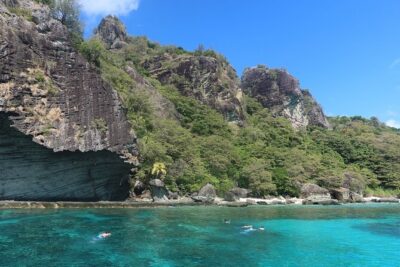
Cruisin Fiji: Authentic Fijian Day Cruise – Best Day in Fiji
Read our review →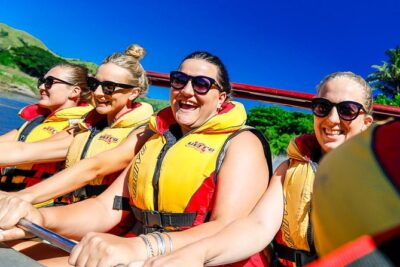
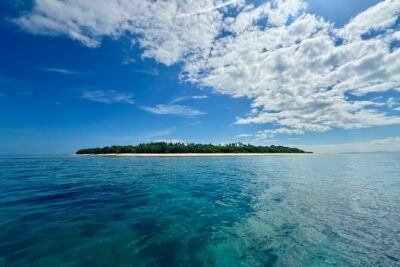
Captain Cook Cruises Fiji – Island and Reef Day Cruise
Read our review →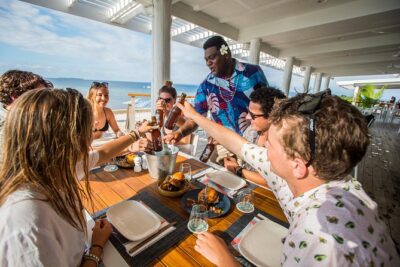

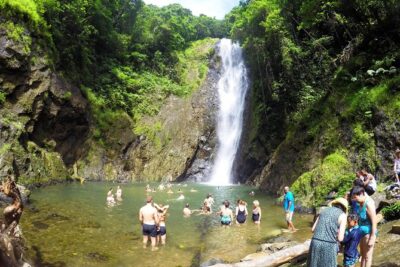
Jewel Of Fiji incl Fijian Village, waterfall & Lunch(Nadi Hotels)
Read our review →
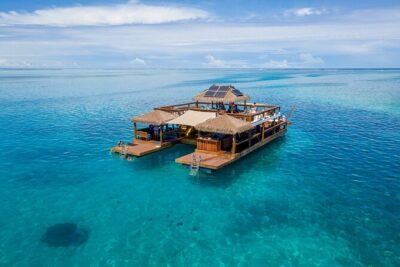
Day Trip to Cloud 9 Floating Platform Including Food and Beverages
Read our review →Browse the lists this tour appears in